Rafael Santandreu the Art of Not Making Yourself Miserable
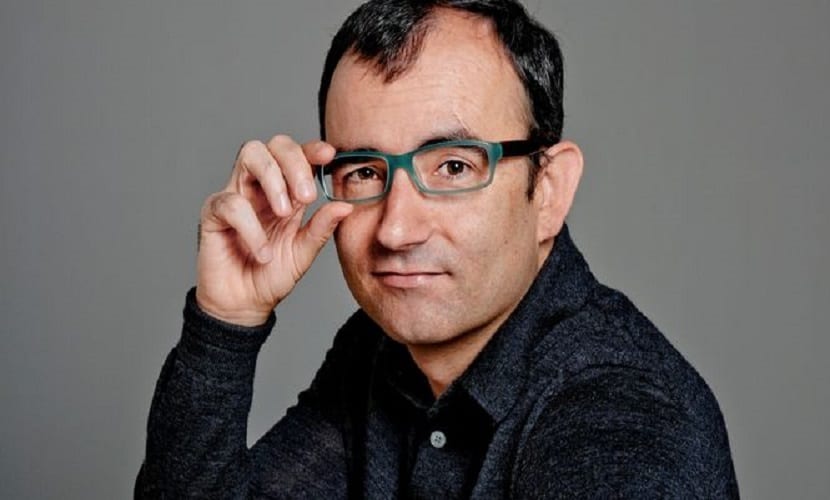
Today nosotros bring y'all the interview with Rafael Santandreu, psychologist and author of "The glasses of happiness" y "The art of not embittering life". The latter was a great sales success last year in Espana in the category of «not-fiction» and nosotros call up that with "The glasses of happiness" a bit of the aforementioned matter will happen. We leave you with his words.
AL: Kickoff of all, we would similar to thank you for giving us a bit of your time to carry out this interview, Rafael. He is i of the best known psychologists in Spain today, and non only for his therapies but also for the success of his volume last yr "The art of not embittering life", 1 of the best sellers if not the nigh in the category of "non-fiction" in Spain. Why do you think your publication has been and so successful?
RS: My first book has been very successful because it is actually constructive. I don't like self-assistance books because I consider them "collections of pretty words," but not very useful. The type of psychology that I do is called "cerebral therapy" and it is supported by more than than two thousand studies published in scientific journals. Many of my readers have bought non just a copy of The Fine art of NOT Making Your Life Biting, merely 10. Seeing the change that occurs in them, they give them to family unit and friends.
AL: And he decided not to stop at this writing and a few months ago he released his 2d book to the publishing market, which he chosen "The glasses of happiness. Notice your emotional force ". I personally have not had the opportunity to read it even so. Would y'all requite me a cursory summary of what I tin find in the book?
RS: You will find the keys to change your character: to become emotionally strong as is, for case, Stephen Hawking, the scientist in a wheelchair. If you radically change your internal dialogue, your emotions change. Y'all will have to practice, practise an average of an hour of homework a 24-hour interval, but the prize is liberty and fulfillment.
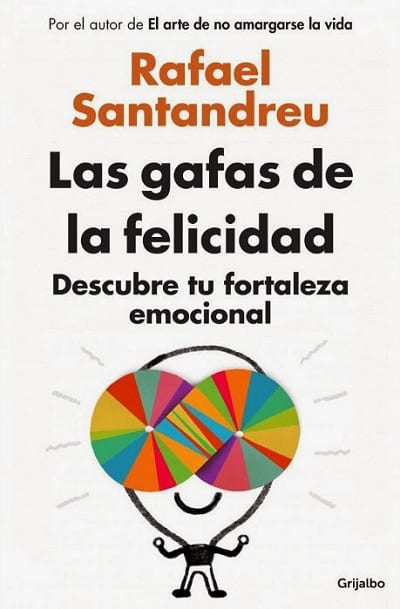
AL: Practice yous call back Rafael that people are not capable of seeing happiness in small details and hence the title of the book?
RS: Seeing the beauty in trivial things is a event of good mental health. When nosotros are bad we do non capeesh the wonders of the 24-hour interval to twenty-four hours. But the key to that mental wellness is to combat the "hyper-demands": tell yourself: "I must exercise everything well or very well or I am a bloody worm of the worst kind!". If you stop giving yourself mental lashes, you brainstorm to breathe easy and at-home down… That is where the healing begins.
AL: I have to confess that I follow him on the show For All two, presented past Marta Càceres and Juanjo Pardo, and listening to him once I thought, if I had the opportunity to speak with Rafael Santandreu one day (wish granted, thank yous Genie!) I would inquire him what he thinks about the 7 bones needs described by Maslow, since you believe that human beings "need" more than than the nuts. What do you have to tell me about this?
RS: The Pyramid of Abraham Maslow, a prominent psychologist of the 50s, says that homo beings motion up from "needs" as they cover the basics. For example, later on food and drink, they brainstorm to crave amusement. Afterwards, a fun job. Then, accurate love ... I would emphasize that information technology is not about "needs" only well-nigh "desires". The "needs" of the human existence are simply nutrient and drink. The rest are e'er "wishes", that is, objectives that may or may not exist fulfilled. If not, we can be just as happy. To be emotionally strong you have to control "necessity", the crazy tendency to turn "wants" into "absolute needs". I only "need" the base of Maslow's pyramid, the food, but not the balance. I don't need a secure job, I don't need a partner, I don't need friends ... Alone, in the field, with the basics, I would already be mega happy.
AL: I read somewhere (frankly I don't remember which one) that nosotros will soon know details of the book he is currently writing. It's true? Will Rafael Santandreu publish a tertiary book?
RS: I am in the. It is a book that will explain how to go strong emotionally but this fourth dimension at higher levels. That is, having and then much emotional intelligence that getting the job you lot desire is a cakewalk; that flirting is very easy, fifty-fifty with babes. Because information technology is true that superior emotional intelligence gives you a beastly competitive advantage considering all people are fatal: they take paralyzing fears in almost all areas of their lives.
AL: I can't help but ask your opinion on the way book and movie, "Fifty Shades of Grey", in which the figure of a psychologist also appears. Have y'all read the volume or seen the movie? What do you call up? How would Rafael Santandreu, a psychologist, treat Mr. Gray?
RS: I don't know much about that book, really. Only that the protagonist likes sado and that in the end the thing ends every bit a honey story. To a person who enjoys sado, I would non say anything considering it is an action as lawful as whatever. Regarding the idea that romantic love is the great redeemer, no joke. Romantic love is overrated. What is truly strong is honey towards the world and others, in full general.
AL: And going back to more literary issues, and every bit a last question, which book or books has Rafael Santandreu enjoyed the nigh? What publications cannot be missing from your personal library?
RS: I am going to recommend three books that for me are literary heights: "On the road", "Lysergic acid punch" and "Dispatches". They are jewels of modernistic American literature, but in improver, they explain real events that have to do with personal fulfillment, states of consciousness, love, life and death. In addition, the three follow a philosophical and aesthetic course. They are like a waterfall since the authors were influenced perchance from The Catcher in the Rye past Salinger.
Over again, thank you Rafael for this interview and thank you also for the advice and contributions that he gives u.s.a. every week in Para Todos la 2. Greetings!
The content of the article adheres to our principles of editorial ethics. To study an error click here!.
Source: https://www.actualidadliteratura.com/en/entrevista-a-rafael-santandreu-psicologo-y-autor-de-las-gafas-de-la-felicidad/

Post a Comment for "Rafael Santandreu the Art of Not Making Yourself Miserable"